
Cleerly CCTA Heart Scan in Los Angeles

The Cleerly Heart Scan detects plaque and heart disease risk early, often before symptoms appear. Book your scan today.

What Is The Cleerly Heart Scan?

The Cleerly Heart Scan is a non-invasive test that gives you a detailed view of your heart health before symptoms ever show.

It uses Coronary CT Angiography (CCTA) paired with advanced imaging analysis to detect plaque buildup and assess your risk of heart disease in real time.

Unlike standard stress tests or routine checkups that may miss early warning signs, this scan gives a much clearer picture of what’s happening inside your arteries, years ahead of a potential cardiac event.

A short walkthrough of how Cleerly analyses your coronary arteries, measuring plaque type and volume vessel by vessel.

What the scan actually shows

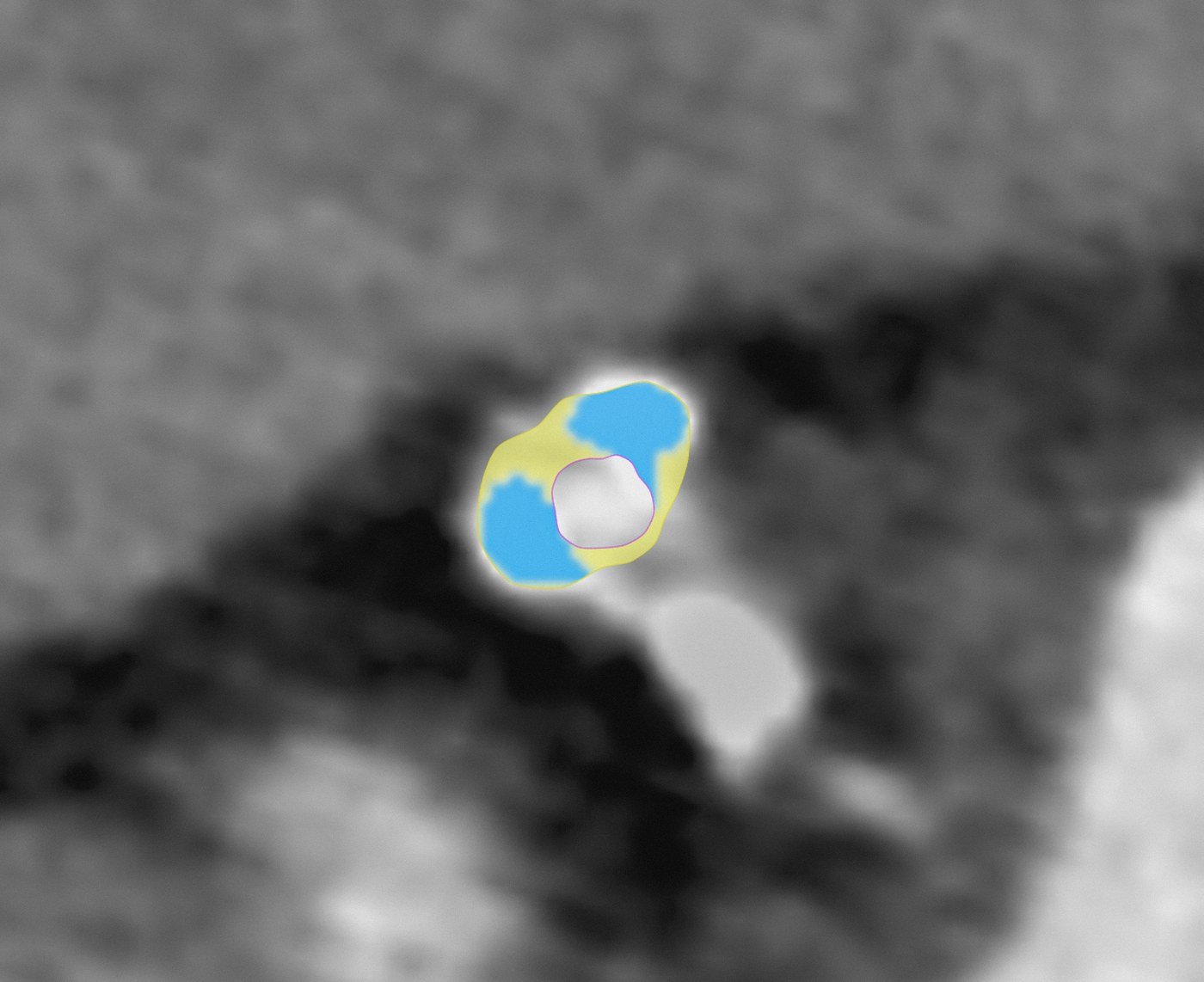
This is what your arteries look like through Cleerly. The scan does not just say whether plaque is present, it measures it and separates it by type, because different kinds of plaque carry different levels of risk.

Cleerly heart scan cross-section of a coronary artery showing calcified plaque in white, non-calcified plaque in blue, and low-density plaque in yellow, with the vessel lumen outlined in magenta
A single artery in cross-section. The colour coding separates calcified plaque (the bright core) from softer non-calcified plaque in blue, with the open channel blood actually flows through outlined in magenta. Soft plaque is the type more associated with sudden events, and it is largely invisible to a traditional calcium score.

Your results, in one view

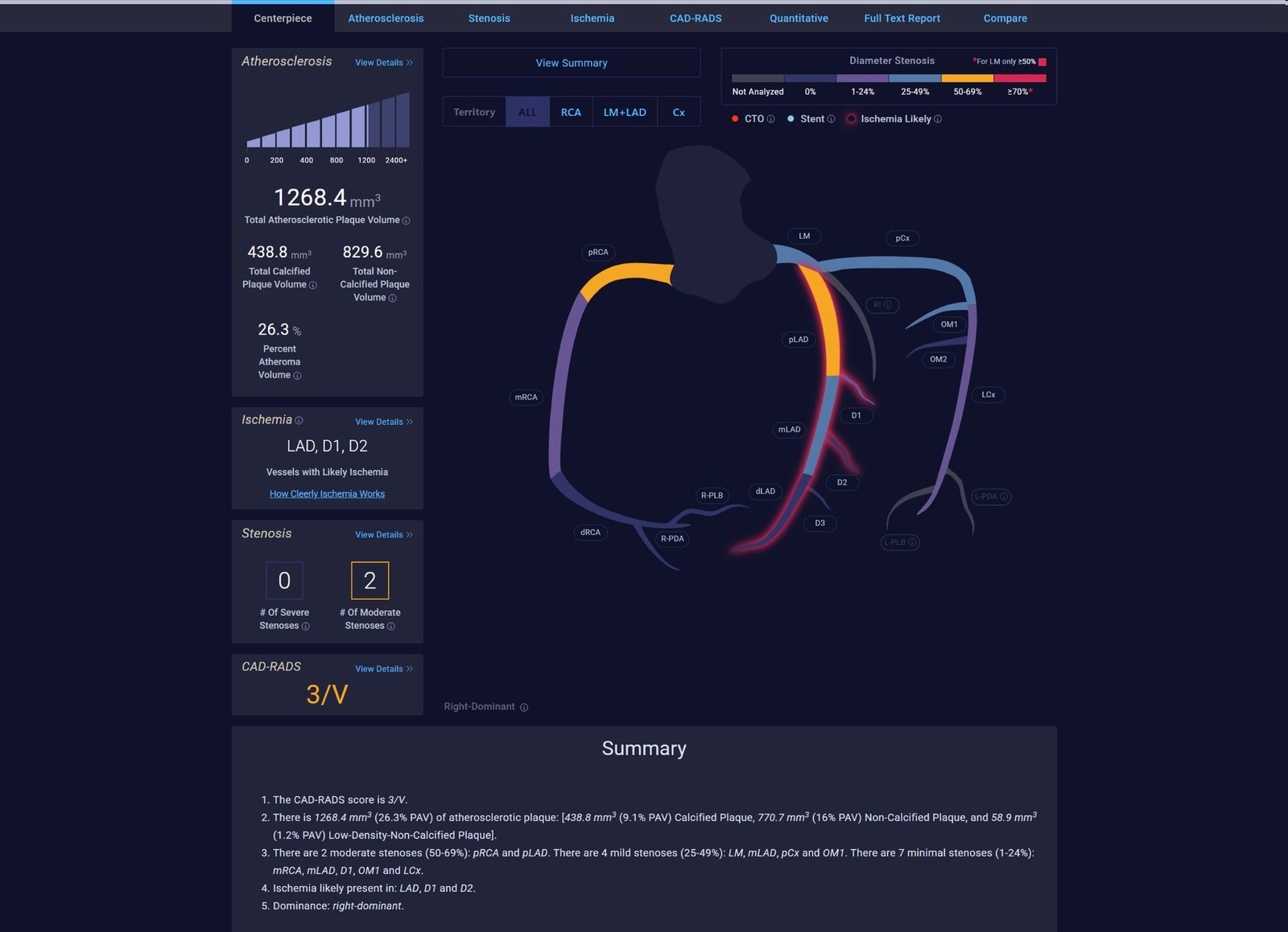
Every scan produces a full analysis of your coronary arteries: total plaque volume, how much of it is calcified versus non-calcified, the degree of narrowing in each vessel, and whether blood flow is likely restricted anywhere.

Cleerly scan report dashboard showing total atherosclerotic plaque volume, calcified and non-calcified plaque breakdown, percent atheroma volume, stenosis counts, CAD-RADS score and a colour-coded map of the coronary arteries
An example Cleerly report. Each artery is mapped and colour coded by how narrowed it is, alongside precise plaque volumes and a CAD-RADS score. This is the level of detail we review with you, rather than a single pass or fail number.

Early detection means you have the opportunity to take meaningful action. Whether that’s adjusting your lifestyle, starting preventive care, or simply gaining peace of mind, the information this scan provides can help guide better decisions about your health. Many patients pair the scan with comprehensive biomarker panels and Galleri multi-cancer screening for a fuller picture of long-term health, and use those insights to guide hormone optimization and other preventive care.

If you’re at risk or just want to stay ahead, this is a smart step. Book your scan today and take control before symptoms ever appear.

Related treatments: Specialty Testing · Galleri Test · HRT

FAQ

A calcium score only measures calcified plaque, which is often stable and less dangerous. The Cleerly scan, on the other hand, detects all types of plaque, including soft, non-calcified plaque that is more likely to rupture and cause a heart attack. It also shows exactly where the plaque is, how much there is, and how it’s affecting your arteries.

  • Total plaque burden
  • Type of plaque (soft, mixed, calcified)
  • Degree of narrowing in coronary arteries
  • Early signs of atherosclerosis
  • Personalized heart disease risk

Up to 50% of people who suffer heart attacks have no symptoms beforehand. The Cleerly scan allows for early detection of cardiovascular disease before it becomes life-threatening. It helps us intervene with lifestyle, medication, or supplements to prevent future heart attacks or strokes.

  • Anyone over age 40 interested in longevity and prevention
  • Patients with a family history of heart disease
  • People with high cholesterol, high blood pressure, or diabetes
  • Individuals with stress, poor sleep, or chronic inflammation

Those who want a more complete picture than traditional lab tests provide.

Even if your EKG, stress test, or cholesterol labs are normal, you could still have dangerous plaque. This scan finds what others miss.

Yes. The scan uses low-dose radiation and IV contrast to get a clear image of your heart and arteries. The amount of radiation is comparable to a mammogram or standard CT scan and is considered very safe, especially when used for early prevention.

The entire process takes about 15 to 30 minutes. It is painless, non-invasive, and requires no recovery time. You’ll be in and out of the imaging center quickly and resume your normal day.

Your scan is analyzed using Cleerly’s proprietary AI technology, then reviewed by a board-certified cardiologist and your TONIIk provider. We’ll sit down with you to explain your results in detail and create a personalized prevention plan based on your unique heart health profile.

  • Prevent heart attacks before they happen
  • Identify hidden risk even with normal labs
  • Get personalized recommendations for heart-healthy lifestyle and therapies
  • Track progress over time with future scans
  • Avoid unnecessary medications or guesswork

For most patients, a Cleerly scan every 2 to 5 years is recommended, depending on your risk level and treatment response. It may be repeated sooner if you’re undergoing an intensive prevention or reversal program.

Currently, this advanced scan is not covered by most insurance plans. It is paid out-of-pocket, and the cost is $2,000+. Many patients at TONIIK view it as an investment in peace of mind and long-term health.

Call us at 818-436-6386 or visit TONIIk at 12210 Ventura Blvd, Studio City, CA. Our team will determine if this scan is right for you and coordinate everything from imaging to results review and long-term heart health support.

Don't Just Take Our Word For It